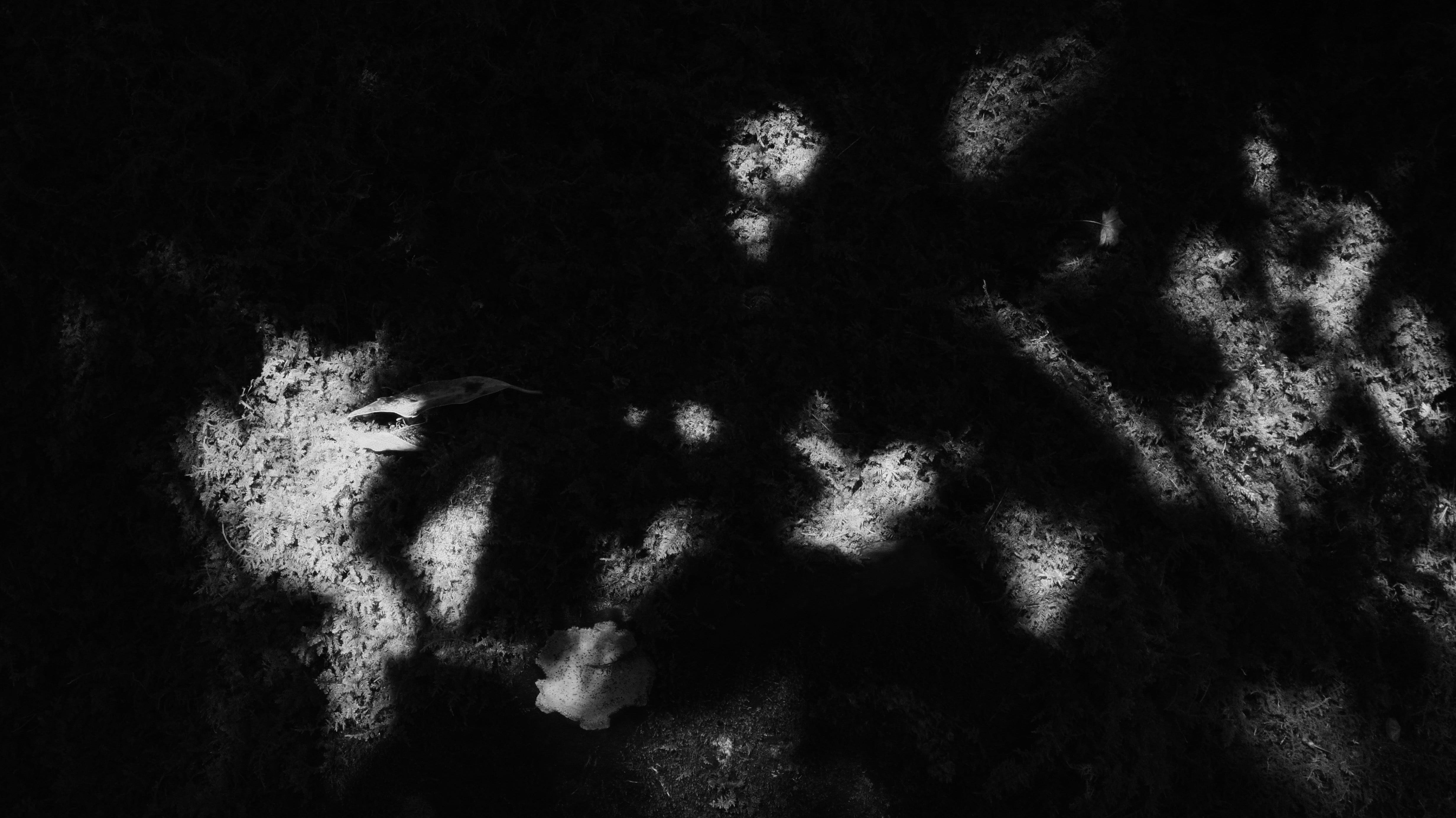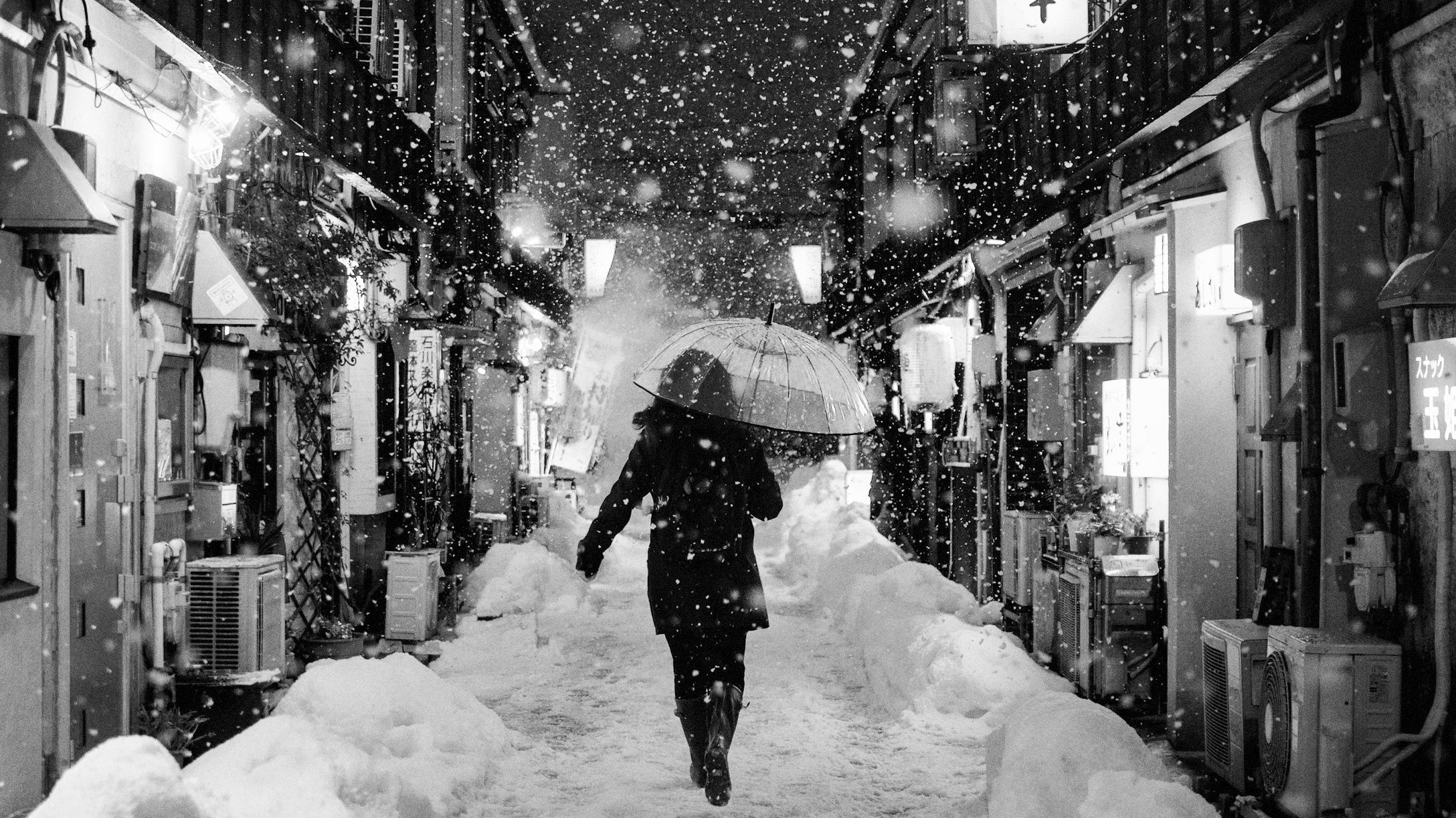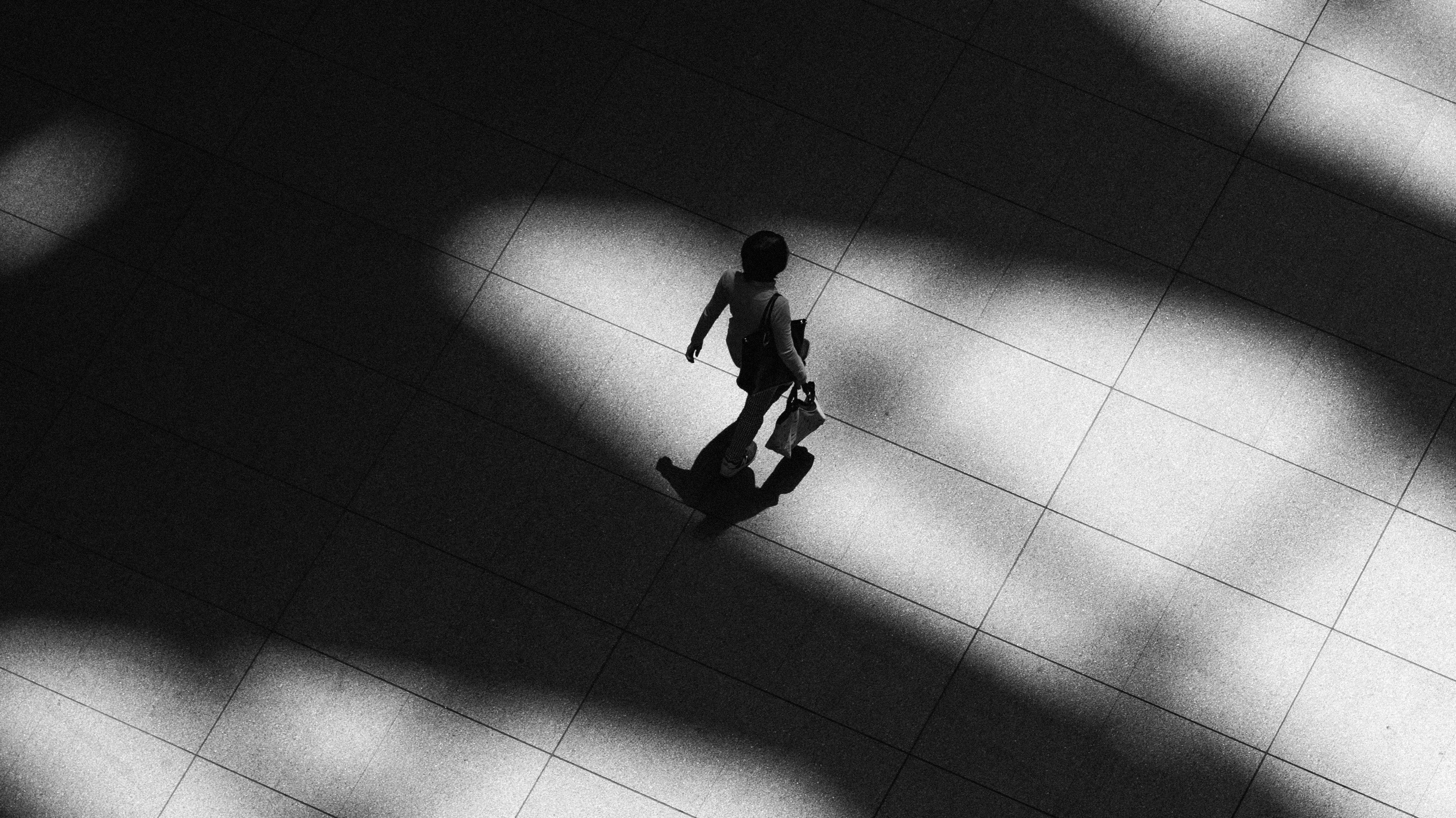
Light is often taken for granted. It is usually seen as something passive, something that simply allows us to see.
But in art, light is not secondary. It is a material.
Artists do not merely use light to reveal forms. They work with it, shape it, and compose with it. Seen this way, light is no longer just illumination. It becomes something else entirely. It becomes part of the work itself.
How Artists Use Light to Guide the Eye
Before we understand what we are looking at, we are already following the light.
Every image has an underlying structure, whether we consciously notice it or not. Some elements move forward, while others recede. What determines this relationship is light.
The human eye is not neutral. It is naturally drawn toward contrast, toward brightness, and toward whatever stands out most strongly within a visual field. Artists have always understood this. By controlling light, they control attention.
In the work of Caravaggio and Rembrandt, light does far more than illuminate a scene. It constructs it. Through precise control of highlights and shadow, they create the illusion of physical form, allowing objects and figures to emerge from the canvas with a powerful sense of weight and presence. Light becomes the silent director of the composition.

Caravaggio, The Calling of Saint Matthew, 1609.
Before a story is understood and before emotion takes shape, the viewer’s eye has already been guided.
The same principle governs visual culture today, in photography, in cinema, and on digital screens. Across centuries and technologies, light remains the invisible structure that holds every image together.
Light as Atmosphere in Art
Once light has structured what we see, it begins to shape how we feel.
Light does not merely reveal surfaces. It creates atmosphere.
Soft light can make a space feel quiet and contained, while harsh light can introduce tension or emotional distance. None of this is accidental. Artists carefully use light in art to influence mood, perception, and emotional response.
In the work of Johannes Vermeer, daylight enters through windows and settles gently across walls and fabric. The result is a sense of stillness and focus, creating an atmosphere of calm and quiet concentration. Light becomes an emotional language as much as a visual one.
By contrast, Edward Hopper often uses light to produce separation rather than comfort. His figures frequently sit in brightness while remaining disconnected from the spaces around them. Here, light isolates as much as it reveals, reinforcing themes of solitude and emotional distance.

Edward Hopper, Nighthawks, 1942.
The subject itself may be simple, a room, a street, a face. Yet under different lighting conditions, the same scene becomes something else entirely.
Before we name an emotion and before we interpret a story, light has already set the tone. It works quietly, and with precision.
When Light Becomes Time in Art
Light is never still. It shifts with the hour, the season, and the weather. Because of this, light becomes one of the clearest ways artists suggest the passage of time.
A scene may remain the same, but the light never does. A low sun stretches shadows. Morning light feels fragile. Late afternoon light carries weight. Through these subtle changes, artists allow viewers to sense time without ever needing to show a clock.
Some artists made this relationship between light and time their central subject. Claude Monet returned again and again to the same scenes, not to repeat them, but to observe how they changed. Water dissolves into morning haze. Bridges glow at sunset. Cathedrals shift beneath moving sunlight. Forms grow simpler and details slowly fall away. What remains is not the scene itself, but the light moving across it.
In each painting, time is recorded in color and air, in atmosphere rather than in form.
Joseph Mallord William Turner pushed this idea even further. In his work, forms begin to dissolve in brightness. Edges soften. Figures blur. Light no longer rests on the surface of objects. It moves through them. Weather becomes force. Sky becomes motion. Landscape becomes feeling.
What remains is atmosphere, movement, and time itself.
Light does not simply show when something is happening. It becomes how time is felt.
Why Light Becomes a Language in Art
Beyond structure, atmosphere, and time, light also carries meaning. Across cultures and throughout history, artists have used light in art to express what cannot be shown directly.
In religious painting, brightness often signals the divine. Light separates sacred figures from the surrounding world, giving visual form to what is unseen. In political imagery, light can imply power and authority. A face placed in brightness appears elevated, and presence becomes importance.
In portraiture, light shapes how a person is read. It can suggest certainty, dignity, or strength. Even a single highlight can change how a face is understood.
In art, light is always a decision. Illumination can suggest presence, while shadow can suggest absence. What is revealed feels important. What is concealed feels secondary. Light does more than shape what we see. It shapes what we believe about what we see.
In this way, light becomes a visual language, one that speaks without words.
Light as Medium in Contemporary Art
In contemporary art, light has undergone a quiet transformation. It is no longer only something that appears within an image. Light has become an artistic medium, a subject in itself, and in many cases, an environment.
With the arrival of electricity and modern lighting, artists began working with light as their primary material, much as a sculptor works with stone or a painter with pigment. Dan Flavin, for example, used ordinary fluorescent tubes as sculpture. The artwork was not only the physical fixture but the colored glow it released into the surrounding space. Light altered the room, the architecture shifted, and the work extended beyond itself.
Some artists approached light as experience rather than object. In the work of James Turrell, rooms are constructed from color and glow. Walls appear to dissolve and space seems to loosen its edges. Light is carefully shaped until it feels almost solid. The work is not about objects. It is about perception.
Other artists began using light not to shape space, but to carry language. Jenny Holzer and Tracey Emin employ LED and neon signs to display text. Here, light turns language into presence. Messages become public, urgent, and impossible to ignore.
From there, light moves beyond language altogether. Olafur Eliasson extends this idea into the natural world, creating immersive environments from mist, reflection, and brightness. His works are not meant to be viewed from a distance. They are meant to be entered.
In The Weather Project, artificial sunlight and fog filled a vast hall. Visitors stood inside an invented sky. The atmosphere itself became the artwork. Here, light does not reveal form. It replaces it.
Light is no longer inside the artwork.
It is the artwork.
Read More Design Articles:
• Negative Space in Art, Design, and Photography: Definition, Meaning, and Examples
• Ma: The Japanese Aesthetic of Negative Space and Time
• 7 Japanese Zen Aesthetic Principles That Define Wabi Sabi
• The Art of Patina: How Time Makes Things Beautiful